
Kathmandu: The Public Service Commission (PSC) has been selecting competent human resources required for public service. Qualification, impartiality and competition are prerequisites to enrol candidates for public/government services, to which PSC is the responsible body for taking exams and recommending the right persons.
PSC is therefore regarded as a foundational pillar for good governance, inclusion and professional civil service.
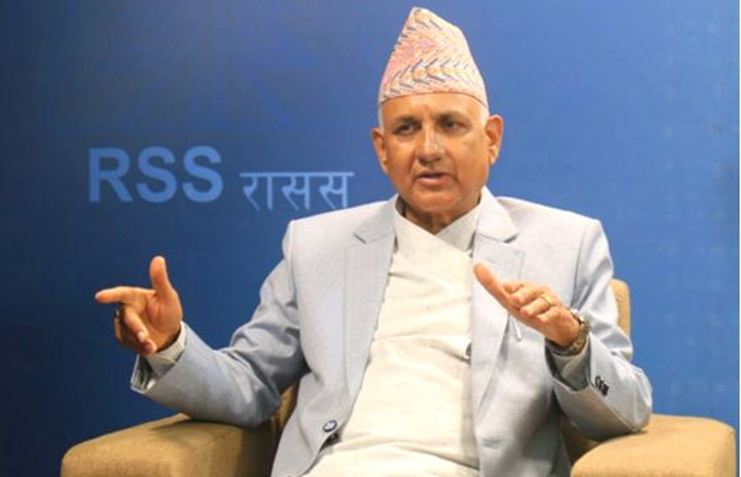
The constitutional body is celebrating its 76th anniversary tomorrow, June 15 (Asar 1). In this connection, PSC chair Madhav Prasad Regmi shared his experience and achievement of PSC with transparent, credible and modern approaches to make Nepal’s public administration further effective.
The following is the chair Regmi’s opinion, prepared based on an interview he gave to RSS correspondent, Bhishma Raj Ojha-
The constitutions Nepal has promulgated so far have incorporated PSC. It was established on Asar 1, 2008 BS as per the Interim Constitution, 2007BS. PSC is given responsibility for fulfilling the civil employees required for state affairs.
The current constitution has given a broader mandate to the PSC, for it is now providing additional services- consultation and conduct of exam and result announcement- to fulfil the vacancies in as many as 74 organized institutions, including four security bodies. It provided consultation to a total of 108 organized institutions. We have PSC representatives at 107 institutions so far.
Following the adoption of the federal system, there are provincial PSCs which fulfill vacancies in the respective provinces and local governments. PSC central office and its subordinates combined make up 14 offices across the country.
The complaints of insufficient employees at sub-national governments might have come because the Province PSCs are in the initial phase and perhaps for not pushing demand. For addressing the complaints and other challenges, the province and local levels can forward demands as per quota in a transparent manner.
Currently, there are some 150 thousand civil employees combined from three tiers of government. However, a report was furnished earlier for 32,000 quotas of employees at the federal level, 22,000 at province and 45,000 at the local level.
The regular fulfilment of vacancies in the province might have been stalled also because of numerous employees taken in contract and on a daily wage basis, in addition to temporary ones.
PSC has made a stride in the examination system with an online form fill-out service, wiping out the hassles of standing in line and a PSC recruitment management system is in place. Adoption of digital and online systems has ensured rapid change and convenient services.
However, the state institution should not hurry- without adequate preparation- to adopt full digital transformation for development. Lack of adequate preparation may sometimes pose a risk.
Over 26,000 employees have been selected through an inclusive cluster. Similarly, an additional cluster of inclusion has ensured the entry of 11,000 others (from open competition). The inclusion represents the country’s ethnic origin, class, region, and geography. Although the inclusion provision was said to be revised in 10 years as per constitutional mandate, it has not been revised so far.
The number of people applying for public service jobs is growing every year. PSC is at work to bring reform to the recruitment process. However, a similar standard adopted for candidates of different levels has created a problem in maintaining uniformity in evaluation.
Last year, as many as 90,000 persons had filled out forms for the pre-qualification test at the fourth level, while 60,000 appeared for the exams, and 20,000 made it.
PSC exams are conducted in various places through its 14 offices across the country. The public service recruitment body is launching preliminary exams (pre-qualification test) even for the kharidar and nayab subba posts, as done for the officer post.
PSC paragon of competence, impartiality, and fairness.
PSC is a paragon of competence, impartiality, and fairness. Reform is continuous at PSC. Even the curricula are being updated to make the exam system timely. In order for the employees to excel in service, they are being encouraged to take exams in the groups/services of related expertise.
The exams are held on an ‘assessment centre methodology’.
However, PSC’s test of an individual is 10 percent which is called the ‘iceberg model’. PSC has been fulfilling vacant posts based on the universal test method and studies. Therefore, the entire perspective of candidates can not be projected.
The irregularities of civil employees can be influenced based on their background, organizational culture and perspectives. So moral education is imperative at people’s families to discourage irregularities in service.
PSC strictly adheres to its annual exam calendar, but if any organized institution does not explicitly send the list of vacant posts, PSC is not aware of such issues. Once the government institutions request fulfilment of posts, then PSC forwards the process. However, the process lengthens in case of crisis, election time and pandemic.
I call the youths to join public service, proving themselves competent because it is the best career space and opportunity to serve the nation. However, languishing with unrelenting abortive efforts for PSC exams is not a wise option either. There are a lot of other options as well.

Comment Here